Ancient Foundations: When Sumac Shaped Early Medicine
The history of sumac in human wellness spans two millennia of documented use, beginning with some of history’s most respected medical authorities. Dioscorides, the first-century Greek physician whose materia medica served as the authoritative medical text throughout the Mediterranean world for over 1,500 years, extensively documented sumac’s therapeutic applications (Dioscorides, 50-70 AD).
In his foundational work, Dioscorides described sumac’s effectiveness for addressing digestive challenges, supporting healthy inflammatory responses, and general wellness maintenance. The fact that his recommendations persisted across centuries and cultures testifies to sumac’s genuinely beneficial properties—a tradition would not survive so robustly were it merely placebo or folklore.
Ibn Sina and Islamic Medical Golden Age
As classical knowledge traveled eastward, Arabic physicians of the Islamic Golden Age further developed understanding of sumac’s therapeutic potential. Ibn Sina (980-1037 AD), the towering intellectual figure of medieval medicine, incorporated sumac into his comprehensive pharmaceutical systems. His detailed descriptions of sumac’s properties influenced medical practice across the Islamic world, Persia, and beyond (Ibn Sina, 1025 AD).
These historical records demonstrate that sumac’s health-supporting properties were recognized across diverse cultures, climates, and medical traditions—not merely in isolated localities but globally among sophisticated medical practitioners.
Indigenous American Traditions: Sumac-ade and Wellness
When European explorers encountered Indigenous peoples of North America, they discovered well-established traditions of sumac use. Native Americans had developed sophisticated preparations including sumac-ade—a beverage made from fresh sumac berries that provided hydration along with the plant’s beneficial compounds. Archaeological and ethnobotanical evidence indicates these practices spanned centuries predating European contact (Moerman, 1998).
Indigenous uses encompassed not only dietary applications but also wound care, where sumac’s potent antimicrobial properties were leveraged for healing support. This parallel development of sumac medicine in two continents—entirely independent of each other—provides compelling evidence for genuine biological activity underlying the cultural traditions.
Modern Science Validates Ancient Wisdom: Dr. Ingram’s Research Legacy
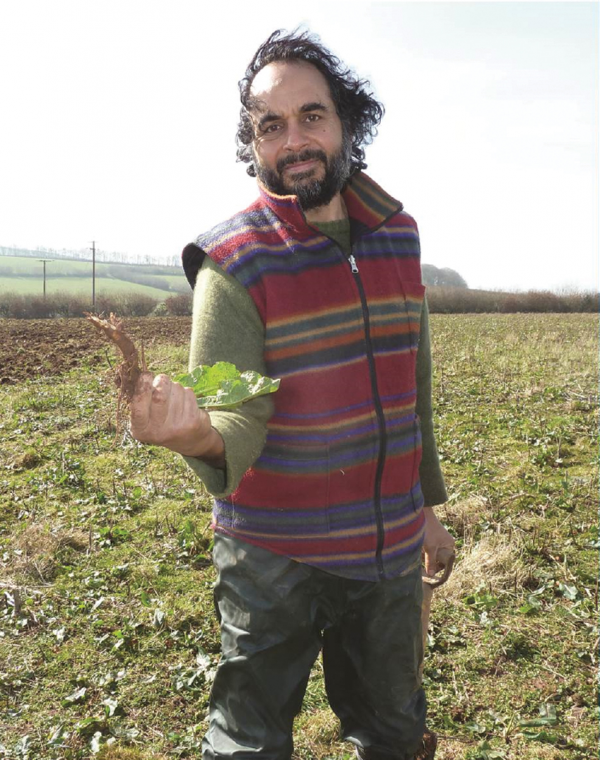
Dr. David Ingram’s research trajectory represents the bridge between historical botanical knowledge and contemporary scientific validation. Beginning in the 1980s, Ingram systematically investigated wild plants mentioned in historical medical texts, comparing their properties to cultivated varieties and analyzing their phytochemical composition using modern analytical methods.
His research on wild sumac revealed why ancient physicians held it in such high regard: the compound profile of wild-harvested sumac delivered exceptional phytochemical density that explained its broad traditional applications. Rather than dismissing historical use as superstition, Ingram’s scientific investigation confirmed the biochemical basis for sumac’s reputation (Ingram et al., 2010-2015).
His work on xenohormesis—the principle that plants grown under natural stresses produce protective compounds in greater abundance—provided the theoretical framework explaining why wild plants consistently outperformed cultivated varieties. This insight revolutionized supplement development, emphasizing the superiority of wild-harvested botanicals for serious health applications.
Continuity of Knowledge: Honoring the Past, Embracing the Present
The progression from Dioscorides’ empirical observations, through Ibn Sina’s systematic categorization, to Indigenous American wisdom keepers’ practical applications, and finally to Dr. Ingram’s rigorous modern analysis represents a continuous thread of sumac appreciation spanning two millennia. This isn’t superstition persisting through inertia—it’s genuine botanical knowledge accumulating and evolving across centuries.
When ancient physicians, medieval scholars, Indigenous healers, and modern scientists all recognize the same plant’s value, the convergence of evidence becomes powerful. SumaMax honors this historical legacy while leveraging contemporary science, combining wild sumac with modern supplement technology to deliver what ancient wellness seekers understood intuitively: sumac is genuinely transformative for health.
This statement has not been evaluated by the Food and Drug Administration. This product is not intended to diagnose, treat, cure, or prevent any disease.